
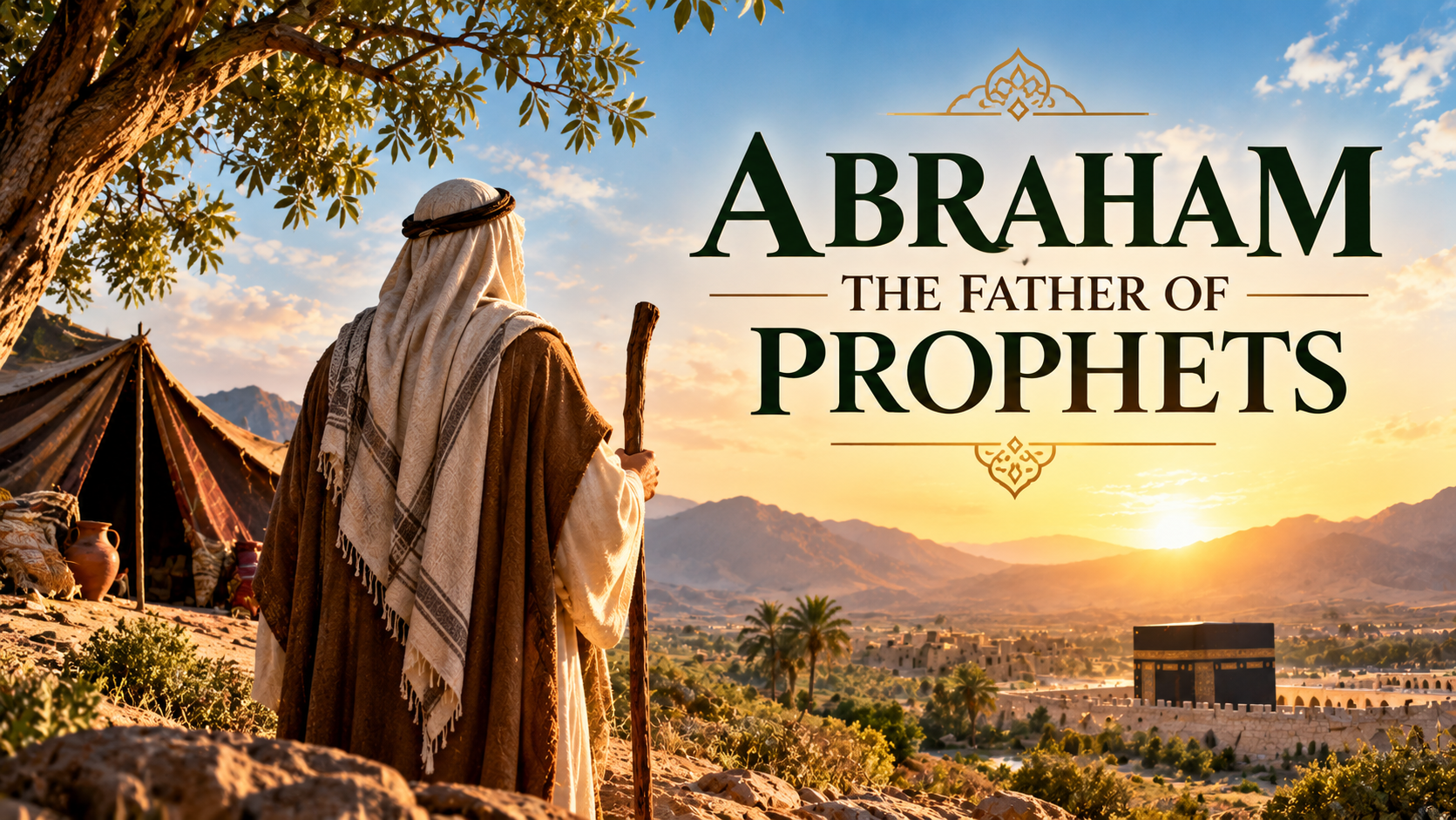
A Story of Faith, Sacrifice, and Complete Trust in Allah
Throughout human history, few individuals have left a spiritual legacy as profound as Prophet Abraham (Ibrahim), peace be upon him.
As Muslims, we honor Abraham as one of Allah’s greatest prophets, a man whose extraordinary faith, courage, and obedience continue to inspire millions of believers around the world.
Abraham holds a special place in Islam, Christianity, and Judaism. He is often called the Father of Prophets because many prophets descended from his family, including Moses, Jesus, and Muhammad ﷺ.
For us, Abraham’s story is more than ancient history. It is a timeless lesson about believing in one God, standing for truth, and trusting Allah even during life’s most difficult trials.
Abraham’s Search for the One True God
Abraham grew up among people who worshipped idols and celestial bodies. But he questioned the beliefs surrounding him and rejected the idea that objects created by human hands could possess divine power.
The Quran describes how Abraham reflected upon the stars, the moon, and the sun, demonstrating that things which rise and disappear cannot be the eternal Creator.
He declared:
“Indeed, I have turned my face toward He who created the heavens and the earth, inclining toward truth, and I am not of those who associate others with Allah.”
— Quran 6:79
Abraham’s message was clear: there is only one God, the Creator of everything.
This belief, known as Tawhid, remains the foundation of Islam today.
The Prophet Who Challenged Idolatry

Abraham courageously challenged his people’s worship of idols.
According to the Quran, he broke their idols, leaving the largest one intact to demonstrate the helplessness of objects that could neither speak nor defend themselves.
His people became furious and decided to punish him by throwing him into a great fire.
But Allah protected His prophet.
The Quran tells us:
“O fire, be coolness and safety upon Abraham.”
— Quran 21:69
By Allah’s command, the fire did not harm him.
This extraordinary event reminds us that faith sometimes requires courage, especially when standing for truth means standing alone.
A Life of Sacrifice and Trust
Abraham’s life was filled with trials that tested his faith and obedience.
One of the greatest was Allah’s command to sacrifice his son.
The Quran describes how Abraham shared his vision with his son, who responded with remarkable faith and willingness to obey Allah.
When they both submitted to Allah’s command, Allah intervened and provided a great sacrifice in place of the son.
The Quran says:
“And We ransomed him with a great sacrifice.”
— Quran 37:107
The Quran does not explicitly name the son in this passage, although the widely accepted Islamic tradition identifies him as Ishmael (Ismail), peace be upon him.
This event is remembered during Eid al-Adha, when Muslims commemorate Abraham’s devotion and obedience to Allah.
The lesson is not that Allah desires human sacrifice, but that sincere faith requires trust, obedience, and willingness to place Allah’s guidance above personal desires.
Abraham, Hagar, and the Sacred City of Makkah

Another important chapter in Abraham’s story concerns his wife Hagar (Hajar) and their son Ishmael.
According to Islamic tradition, Abraham left Hagar and their infant son in the barren valley of Makkah by Allah’s command.
When their water ran out, Hagar desperately searched for help, moving between the hills of Safa and Marwah.
Through Allah’s mercy, the spring of Zamzam emerged, providing water in the desert.
Today, millions of Muslims remember Hagar’s determination during Hajj and Umrah by walking between Safa and Marwah.
Later, Abraham and Ishmael raised the foundations of the Kaaba, the sacred house of worship in Makkah.
Allah says:
“And [mention] when Abraham was raising the foundations of the House and [with him] Ishmael, [saying], ‘Our Lord, accept [this] from us. Indeed You are the Hearing, the Knowing.’”
— Quran 2:127
The Kaaba remains the direction toward which Muslims around the world turn during their daily prayers.
We do not worship the Kaaba. We worship Allah alone, following the tradition of monotheism taught by Abraham.
Why Is Abraham Called the Father of Prophets?
Abraham is known as the Father of Prophets because many prophets came from his descendants.
Through his son Isaac (Ishaq) came Jacob, Joseph, Moses, David, Solomon, and Jesus, peace be upon them.
Through his son Ishmael came Prophet Muhammad ﷺ, according to Islamic tradition.
Thus, Abraham’s family became central to the histories of Judaism, Christianity, and Islam.
The Quran describes Abraham as a model of sincere devotion:
“Indeed, Abraham was a [comprehensive] leader, devoutly obedient to Allah, inclining toward truth, and he was not of those who associate others with Allah.”
— Quran 16:120
As Muslims, we believe that Abraham was neither a follower of Judaism nor Christianity as later religious traditions, but a true monotheist who submitted himself entirely to Allah.
The Quran states:
“Abraham was neither a Jew nor a Christian, but he was one inclining toward truth, a Muslim [submitting to Allah].”
— Quran 3:67
Abraham’s Legacy in Our Lives Today
Abraham’s legacy remains deeply connected to Muslim worship and daily life.
We remember him during our five daily prayers when we ask Allah to bless Muhammad ﷺ and his family as He blessed Abraham and his family.
We follow his legacy during Hajj, when Muslims perform rituals connected to Abraham, Hagar, and Ishmael.
We commemorate his devotion during Eid al-Adha.
And most importantly, we follow his example by worshipping Allah alone.
His story teaches us that faith requires more than words.
It requires courage when facing opposition, patience during hardship, gratitude for blessings, and trust in Allah when the future is uncertain.
A Faith That Continues Through Generations
Thousands of years have passed since Abraham walked upon the earth, yet his message remains alive.
He taught humanity to reject false gods, seek truth, and devote worship to the Creator alone.
His story connects generations of believers across different lands, languages, and cultures.
For us as Muslims, Abraham is not merely a historical figure.
He is Khalil Allah — the close friend of Allah, a prophet whose faith continues to guide and inspire us.
Abraham’s greatest legacy was not a kingdom, wealth, or worldly power. It was his unwavering belief in the One God—a belief that continues to unite millions of hearts today.
إبراهيم عليه السلام: أبو الأنبياء
قصة الإيمان والتضحية والتوكل الكامل على الله
على امتداد التاريخ الإنساني، قلّما نجد شخصية تركت أثرًا روحيًا عظيمًا مثل نبي الله إبراهيم عليه السلام.
فنحن المسلمين نؤمن بأن إبراهيم من أعظم أنبياء الله، وأن إيمانه الراسخ وشجاعته وطاعته لله لا تزال مصدر إلهام للمؤمنين في أنحاء العالم.
ويحتل إبراهيم مكانة خاصة في الإسلام والمسيحية واليهودية، ويُعرف بلقب أبي الأنبياء لأن عددًا كبيرًا من الأنبياء جاءوا من ذريته، ومنهم موسى وعيسى ومحمد ﷺ.
وبالنسبة لنا، فإن قصة إبراهيم ليست مجرد أحداث من التاريخ القديم، بل هي دروس خالدة في التوحيد والشجاعة والثبات على الحق والتوكل على الله.
إبراهيم والبحث عن الإله الواحد
نشأ إبراهيم عليه السلام بين قوم يعبدون الأصنام والأجرام السماوية.
لكنه رفض أن تكون الأشياء التي يصنعها البشر أو المخلوقات التي تظهر وتختفي آلهة تستحق العبادة.
ويصف القرآن الكريم كيف حاجّ قومه من خلال التأمل في النجوم والقمر والشمس، مبينًا أن ما يأفل ويغيب لا يمكن أن يكون الإله الحق.
قال تعالى على لسان إبراهيم:
﴿إِنِّي وَجَّهْتُ وَجْهِيَ لِلَّذِي فَطَرَ السَّمَاوَاتِ وَالْأَرْضَ حَنِيفًا وَمَا أَنَا مِنَ الْمُشْرِكِينَ﴾
— سورة الأنعام، الآية ٧٩.
كانت رسالة إبراهيم واضحة: الله واحد، وهو خالق كل شيء.
وهذا التوحيد هو أساس العقيدة الإسلامية إلى يومنا هذا.
النبي الذي تحدى عبادة الأصنام

واجه إبراهيم عليه السلام قومه بشجاعة، ودعاهم إلى ترك عبادة الأصنام.
ويخبرنا القرآن أنه حطم أصنامهم وترك كبيرها، ليبين لهم عجز تلك المعبودات عن الكلام أو الدفاع عن نفسها.
فغضب قومه وقرروا معاقبته بإلقائه في نار عظيمة.
لكن الله سبحانه وتعالى أنقذ نبيه.
قال تعالى:
﴿قُلْنَا يَا نَارُ كُونِي بَرْدًا وَسَلَامًا عَلَىٰ إِبْرَاهِيمَ﴾
— سورة الأنبياء، الآية ٦٩.
فلم تضره النار بأمر الله.
وتعلمنا هذه المعجزة أن التمسك بالحق قد يحتاج إلى شجاعة عظيمة، خاصة عندما يجد الإنسان نفسه وحيدًا أمام معارضة الآخرين.
حياة مليئة بالابتلاء والتضحية
مر إبراهيم عليه السلام باختبارات عظيمة أظهرت قوة إيمانه وطاعته لله.
ومن أشهرها رؤياه التي تضمنت ذبح ابنه.
ويذكر القرآن أن إبراهيم أخبر ابنه بما رأى، فأظهر الابن طاعة وصبرًا عظيمين.
وعندما استسلما كلاهما لأمر الله، جاء الفرج، وفدى الله الابن بذبح عظيم.
قال تعالى:
﴿وَفَدَيْنَاهُ بِذِبْحٍ عَظِيمٍ﴾
— سورة الصافات، الآية ١٠٧.
ولم يذكر القرآن اسم الابن صراحة في هذه القصة، لكن المشهور عند جمهور علماء المسلمين أنه إسماعيل عليه السلام.
ونحن نحيي ذكرى هذه الطاعة والتضحية في عيد الأضحى المبارك.
ولا تعني هذه القصة أن الله يريد التضحية بالبشر، بل تعلمنا أن الإيمان الحقيقي يقوم على الثقة بالله وطاعته وتقديم أمره على رغبات النفس.
إبراهيم وهاجر وبداية مكة المكرمة
من أهم فصول قصة إبراهيم عليه السلام ما يتعلق بزوجته هاجر وابنهما إسماعيل.
فبحسب الروايات الإسلامية، ترك إبراهيم هاجر وطفلها الرضيع في وادي مكة بأمر الله، وكان الوادي آنذاك خاليًا من الزرع والماء.
وعندما نفد الماء، بدأت هاجر تبحث عن النجاة لابنها، فسعت بين جبلي الصفا والمروة.
وبفضل رحمة الله، تفجر ماء زمزم في ذلك الوادي.
وحتى اليوم، يستحضر ملايين المسلمين قصة هاجر وصبرها وسعيها عندما يؤدون مناسك الحج والعمرة.
وبعد ذلك، رفع إبراهيم وإسماعيل عليهما السلام قواعد الكعبة المشرفة.
قال الله تعالى:
﴿وَإِذْ يَرْفَعُ إِبْرَاهِيمُ الْقَوَاعِدَ مِنَ الْبَيْتِ وَإِسْمَاعِيلُ رَبَّنَا تَقَبَّلْ مِنَّا إِنَّكَ أَنْتَ السَّمِيعُ الْعَلِيمُ﴾
— سورة البقرة، الآية ١٢٧.
وأصبحت الكعبة قبلة المسلمين في صلواتهم حول العالم.
ونحن لا نعبد الكعبة، وإنما نعبد الله وحده، ونتجه إليها امتثالًا لأمره واتباعًا لملة إبراهيم الحنيفية.
لماذا يُلقب إبراهيم بأبي الأنبياء؟
يُعرف إبراهيم عليه السلام بأبي الأنبياء لأن كثيرًا من الأنبياء جاءوا من ذريته.
فمن نسل ابنه إسحاق جاء يعقوب ويوسف وموسى وداود وسليمان وعيسى، عليهم السلام.
ومن نسل ابنه إسماعيل جاء النبي محمد ﷺ، وفقًا لما توارثته المصادر الإسلامية.
وهكذا ارتبطت ذرية إبراهيم بتاريخ الديانات السماوية الثلاث.
وقد وصف القرآن إبراهيم بأنه نموذج للطاعة والإخلاص.
قال تعالى:
﴿إِنَّ إِبْرَاهِيمَ كَانَ أُمَّةً قَانِتًا لِلَّهِ حَنِيفًا وَلَمْ يَكُ مِنَ الْمُشْرِكِينَ﴾
— سورة النحل، الآية ١٢٠.
ونحن المسلمين نؤمن بأن إبراهيم كان موحدًا لله، ولم يكن تابعًا لليهودية أو المسيحية بصورتيهما التاريخيتين اللاحقتين.
قال تعالى:
﴿مَا كَانَ إِبْرَاهِيمُ يَهُودِيًّا وَلَا نَصْرَانِيًّا وَلَٰكِنْ كَانَ حَنِيفًا مُسْلِمًا وَمَا كَانَ مِنَ الْمُشْرِكِينَ﴾
— سورة آل عمران، الآية ٦٧.
أثر إبراهيم في حياتنا اليوم
لا تزال سيرة إبراهيم عليه السلام حاضرة في عبادات المسلمين وحياتهم اليومية.
فنحن نذكره في صلواتنا عندما نسأل الله أن يصلي على محمد ﷺ وآله كما صلى على إبراهيم وآله.
ونتذكره في مناسك الحج التي ترتبط بأحداث من حياته وحياة هاجر وإسماعيل.
ونحيي ذكرى طاعته وتضحيته في عيد الأضحى.
والأهم من ذلك أننا نقتدي به في توحيد الله وإخلاص العبادة له.
وتعلمنا قصته أن الإيمان ليس مجرد كلمات، بل هو شجاعة عند مواجهة الباطل، وصبر عند الشدائد، وشكر عند النعم، وثقة بالله عندما يكون المستقبل مجهولًا.
إيمان يتوارثه المؤمنون عبر الأجيال
مرت آلاف السنين منذ عاش إبراهيم عليه السلام، لكن رسالته لا تزال حية في قلوب المؤمنين.
لقد دعا الناس إلى ترك عبادة غير الله، والبحث عن الحق، وإخلاص العبادة للخالق الواحد.
ولا تزال قصته تربط أجيالًا من المؤمنين في مختلف البلدان والثقافات واللغات.
وبالنسبة لنا نحن المسلمين، فإن إبراهيم ليس مجرد شخصية تاريخية عظيمة.
بل هو خليل الرحمن، النبي الذي اتخذه الله خليلًا، والذي لا يزال إيمانه مصدر هداية وإلهام لنا.
لم يكن أعظم ما تركه إبراهيم عليه السلام ملكًا أو ثروة أو سلطانًا، بل كان إيمانه الراسخ بالله الواحد، ذلك الإيمان الذي لا يزال يجمع قلوب الملايين حتى يومنا هذا.
Halal County — A Home for Faith and Knowledge
A place to learn, reflect, and discover the beauty of Islam.
هلال كاونتي — بيت للإيمان والمعرفة
مساحة للتعلم والتأمل واكتشاف جمال الإسلام.

Leave a Reply