
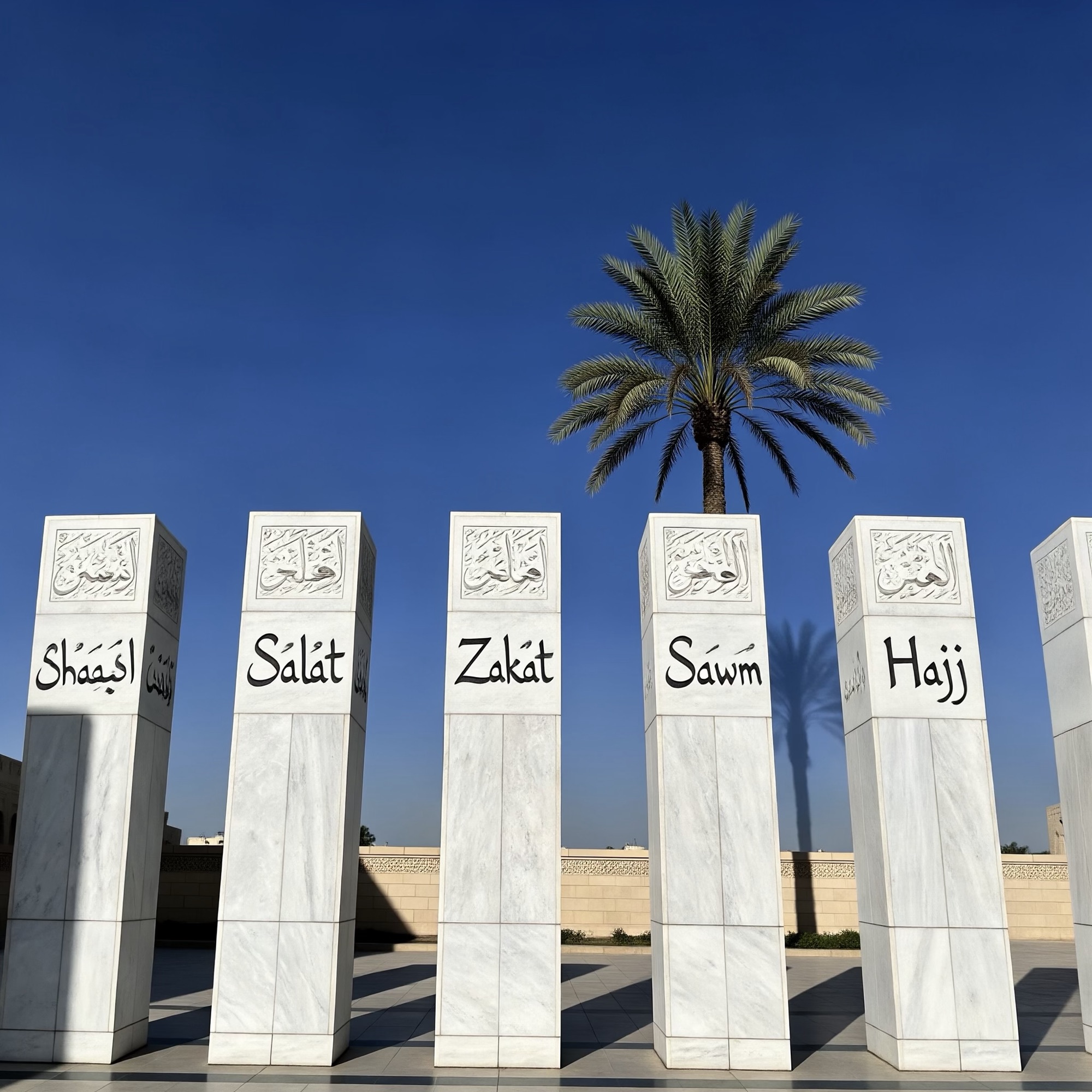
The Five Pillars of Islam: A Simple Explanation
أركان الإسلام الخمسة: شرح مبسّط
Introduction | المقدمة
English: The Five Pillars of Islam are the five fundamental acts of worship that form the foundation of a Muslim’s faith and practice. They teach Muslims to believe in Allah, worship Him, help those in need, and live with discipline and devotion. Every Muslim should learn about these pillars and understand their importance in daily life.
العربية: أركان الإسلام الخمسة هي العبادات الأساسية التي يقوم عليها الإسلام، وتمثّل أساس إيمان المسلم وعمله. وهي تعلّم المسلم الإيمان بالله، وعبادته، ومساعدة المحتاجين، والالتزام بالطاعة والانضباط. وينبغي لكل مسلم أن يتعلّم هذه الأركان ويفهم أهميتها في حياته اليومية.
1. Shahada (Declaration of Faith) | الشهادة
English: The Shahada is the declaration that there is no god worthy of worship except Allah and that Muhammad is the Messenger of Allah. It expresses the foundation of Islamic belief and the acceptance of Allah’s oneness and Muhammad’s prophethood. A Muslim believes in this testimony sincerely and seeks to live according to its meaning.
العربية: الشهادة هي الإقرار بأنه لا إله إلا الله، وأن محمدًا رسول الله. وهي تعبّر عن أساس العقيدة الإسلامية، وهو توحيد الله والإيمان برسالة النبي محمد ﷺ. ويؤمن المسلم بهذه الشهادة بصدق، ويسعى إلى العمل بما تدلّ عليه.

2. Salah (Prayer) | الصلاة
English: Salah is the performance of five obligatory prayers each day: Fajr, Dhuhr, Asr, Maghrib, and Isha. Prayer helps Muslims remember Allah, strengthen their faith, and seek His guidance throughout the day. Muslims perform these prayers at their prescribed times while observing the required conditions of prayer.
العربية: الصلاة هي أداء الصلوات الخمس المفروضة كل يوم: الفجر، والظهر، والعصر، والمغرب، والعشاء. وتساعد الصلاة المسلم على ذكر الله، وتقوية إيمانه، وطلب الهداية منه طوال اليوم. ويؤدي المسلم هذه الصلوات في أوقاتها المحددة مع مراعاة شروط الصلاة وأحكامها.

3. Zakat (Obligatory Charity) | الزكاة
English: Zakat is the obligatory charity that eligible Muslims give when their qualifying wealth meets the required conditions. It helps people in need and purifies a Muslim’s wealth while encouraging generosity and social responsibility. Its amount and eligibility rules depend on the type of wealth and the relevant Islamic rulings.
العربية: الزكاة هي صدقة واجبة يؤديها المسلم المستحق للوجوب إذا بلغ ماله النصاب وتحققت فيه الشروط المطلوبة. وهي تساعد المحتاجين، وتطهّر المال، وتغرس في المسلم روح الكرم والمسؤولية الاجتماعية. ويختلف مقدار الزكاة وشروط وجوبها بحسب نوع المال والأحكام الشرعية المتعلقة به.

4. Sawm (Fasting in Ramadan) | الصيام
English: Sawm means fasting during the month of Ramadan, from dawn until sunset, by abstaining from food, drink, and other things that invalidate the fast. Fasting teaches patience, self-control, gratitude, and compassion for those who experience hunger. Muslims who have valid exemptions, such as certain illnesses or travel circumstances, follow the relevant Islamic rulings regarding making up or otherwise addressing missed fasts.
العربية: الصيام هو الامتناع عن الطعام والشراب وسائر المفطّرات من طلوع الفجر إلى غروب الشمس خلال شهر رمضان. ويعلّم الصيام المسلم الصبر وضبط النفس والشكر والتعاطف مع من يعانون الجوع. ولمن لديهم أعذار شرعية، مثل بعض الأمراض أو السفر، أحكام خاصة تتعلق بقضاء الصيام أو غير ذلك بحسب الحالة.

5. Hajj (Pilgrimage to Makkah) | الحج
English: Hajj is the pilgrimage to Makkah that every Muslim who is physically and financially able must perform once in a lifetime. It takes place during specific days of the Islamic month of Dhul-Hijjah and includes prescribed acts of worship. Hajj brings Muslims from different backgrounds together in worship, humility, and devotion to Allah.
العربية: الحج هو قصد مكة المكرمة لأداء مناسك مخصوصة، ويجب مرة واحدة في العمر على المسلم المستطيع بدنيًا وماليًا. ويُؤدّى الحج في أيام محددة من شهر ذي الحجة، ويشمل أعمالًا وعبادات شرعها الإسلام. ويجمع الحج المسلمين من مختلف البلدان والخلفيات على العبادة والتواضع والإخلاص لله.

Conclusion | الخاتمة
English: The Five Pillars of Islam provide a practical foundation for Muslim worship and daily life. Each pillar strengthens a Muslim’s relationship with Allah and encourages good character, responsibility, and care for others. Learning and practicing these pillars is an important step toward understanding Islam.
العربية: تمثّل أركان الإسلام الخمسة أساسًا عمليًا لعبادة المسلم وتنظيم حياته اليومية. ويساعد كل ركن منها على تقوية صلة المسلم بالله، والتحلّي بالأخلاق الحسنة، وتحمل المسؤولية، والإحسان إلى الآخرين. ويُعدّ تعلّم هذه الأركان والعمل بها خطوة مهمة لفهم الإسلام.

Leave a Reply